You are viewing 1 of your 1 free articles
Specialised domestic abuse support plays a vital but hidden role
Too many survivors still encounter barriers to accessing support that is safe, suitable and culturally appropriate, writes Helena Doyle, customer experience director at Stonewater


 Too many survivors still encounter barriers to accessing support that is safe, suitable and culturally appropriate, writes Helena Doyle, customer experience director at Stonewater #UKhousing
The impact of domestic abuse can ruin lives and ripple far beyond the immediate survivor. It shapes children’s futures, destabilises communities and places a strain on housing, health and social care systems. Yet, despite greater recognition through the Domestic Abuse Act and growing public awareness, too many survivors still encounter barriers to accessing support that is safe, suitable and culturally appropriate.
For more than two decades, Stonewater has delivered domestic abuse services that respond to the needs of survivors in all their diversity. While some may question the role of a housing association in this field, our experience shows that bringing together safe accommodation with specialist, trauma-informed support is a model that works – and often provides services not found elsewhere.
Women’s Aid research shows that over 60% of survivors are turned away due to a lack of space or specialist provision, making tailored and hyper-specific services, provided by dedicated and inclusive organisations, absolutely vital. We deliver women and children’s refuges across six local authority areas, alongside specialist services for communities who are often underserved, including older people, migrants, disabled people and those with mental health issues, as well as those with overlapping and complex needs.
Stonewater’s South Asian Women’s Refuge, the oldest in our network, has supported survivors for more than 20 years. We also run dedicated services for LGBTQ+ survivors and employ and invest heavily in specialist teams that are focused on the needs of BME communities, children and young people.
Beyond traditional refuge provision, we also deliver a dispersed safe accommodation scheme, providing options for those unable to access communal settings, such as larger families, male survivors or survivors with pets. We also run an innovative community capacity-building service to strengthen support for people from BME communities, who made up almost half of the survivors we supported last year, which helps to reduce barriers and ensure culturally appropriate support.
By diversifying our accommodation and services, we remove barriers that too often prevent people from leaving abuse, ensuring that those who would otherwise have nowhere to go are supported to rebuild their lives.
Over the past four years, Stonewater has invested heavily in building its specialist capacity. With a team dedicated to the improvement and growth of our survivor support services, we have more than doubled our domestic abuse portfolio while also retaining all of our commissioned services – no small feat in a funding environment marked by cuts and uncertainty.
“By diversifying our accommodation and services, we remove barriers that too often prevent people from leaving abuse, ensuring that those who would otherwise have nowhere to go are supported to rebuild their lives”
That resilience is a testament to the strength of our relationships with local authorities, where we work collaboratively to co-design services, respond to emerging requirements and bring in additional resources tailored to specific local needs. In Bedford, for example, we have secured specialist funding for counsellors and children’s workers, extending the impact of our commissioned services and tailoring them more closely to local priorities.
One of the areas where the gap between legislation and lived reality is most visible is in the support available for children. The Domestic Abuse Act rightly recognised children as survivors in their own right. Yet in practice, investment has not followed and children’s services are still chronically underfunded.
Stonewater has been one of the organisations determined and equipped to fill this gap, creating and securing funding for four specialist children’s worker posts and employing two play therapists in refuges to help children process their experiences and move forward with support. This additional resource meant that last year, 92% of the school-age children we worked with were supported back into education.
Accessibility is another challenge. While some of our schemes already provide accessible units, we know this needs to go further and are exploring funding channels to enable us to invest in improving physical access across our portfolio so that disabled survivors can find safety without additional barriers.
True specialism means more than professional training. It means listening to the lived experience of survivors and adapting services accordingly. We are proud that Stonewater is committed to embedding survivor voice in every part of its work, creating physically and psychologically safe spaces.
Our teams are supported in undertaking specialist training and professional development, equipping them with the expertise needed to provide trauma-informed care. As well as safe spaces and immediate support, Stonewater supports survivors to regain independence and access additional resources. In 2024-25 we enabled 99% of survivors to access improved legal support, and 92% reported improvements in education and employment outcomes.
Our SafeLives Leading Lights accreditation, a mark of excellence for frontline domestic abuse services, further reflects both the quality and inclusivity of our services.
“True specialism means more than professional training. It means listening to the lived experience of survivors and adapting services accordingly”
Gathering survivor feedback is not always straightforward: people in crisis cannot be expected to complete surveys or formal feedback forms. We have to think differently and often take a more holistic approach, creating safe spaces for informal conversations, running children’s activities that incorporate opportunities for feedback and capturing insights through day-to-day interactions in refuges. Technology also creates opportunities – the use of QR codes for anonymous comments, for instance.
Our customer scrutiny panel is also preparing to launch a deep dive into the survivor voice, ensuring survivors have a direct role in shaping the future of our domestic abuse services. Many survivors also stay in touch long after moving on, offering their stories and support to others as a powerful reminder of what safe, specialist services can achieve.
Some continue to question whether a housing provider should be at the heart of domestic abuse support. Our experience shows that housing organisations are uniquely placed to lead, and that by working alongside other specialist providers, charities and community organisations, we can contribute to the safe, stable housing that is the bedrock upon which recovery is built. Without this collaboration and varied providers stepping up to support survivors, they remain at risk of returning to abusive environments, unable to break the cycle.
Unfortunately, funding cuts have taken their toll on domestic abuse services nationwide. Many providers have been forced to scale back or close, leaving survivors with fewer options.
Stonewater’s ability to retain funding and even grow provision in this climate, supporting 155 adults and 189 children in 2024-25, is not accidental. This stems from and is testament to the quality of our work, the trust we build with commissioners, our reputation as an inclusive provider and the lives we have helped to change for the better.
Our access to varied housing stock, alongside sector expertise, means we can support survivors to transition more smoothly from crisis accommodation to long-term stability, last year supporting 82% of survivors to move on positively, 6% of whom moved into Stonewater homes.
By combining housing expertise with specialist support, Stonewater bridges a gap between immediate crisis and long-term recovery. Our services are not just about providing a roof over someone’s head; they are about creating psychologically safe environments, where trauma-informed practice is embedded and survivors are empowered to rebuild their lives.
If services like ours did not exist, where would survivors go? Too often, the answer is nowhere safe.
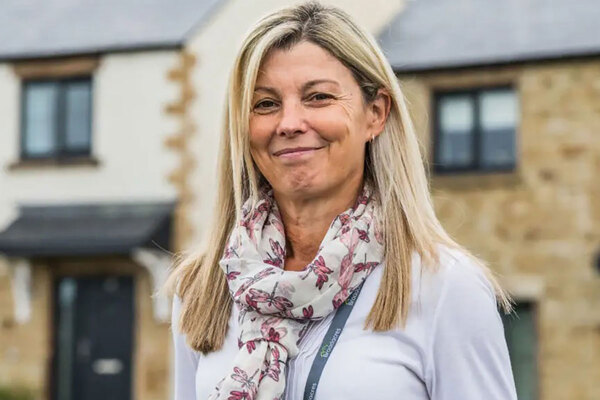
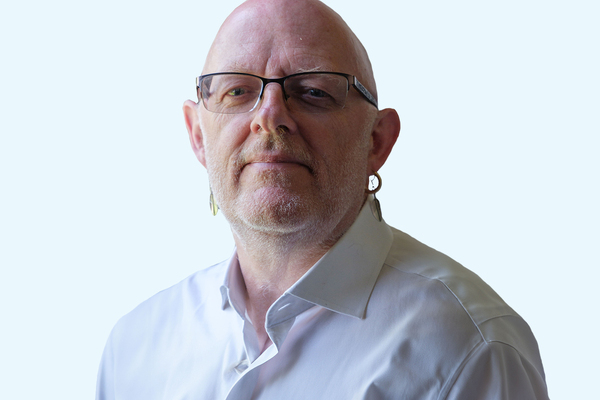
Helena Doyle, customer experience director, Stonewater
Sign up to Inside Housing’s Care and Support newsletter
Sign up to Inside Housing’s Care and Support newsletter, a fortnightly bulletin featuring care and support news and analysis.
Click here to register and receive the Care and Support newsletter straight to your inbox.
And subscribe to Inside Housing by clicking here.
Already have an account? Click here to manage your newsletters.
Latest stories