You are viewing 1 of your 1 free articles
London landlord evacuates blocks with cracking concrete as regulator issues safety warning
London landlord Notting Hill Genesis (NHG) has said it had to evacuate hundreds of residents from their homes weeks before Christmas due to an “emerging” building safety issue with reinforced concrete slabs.


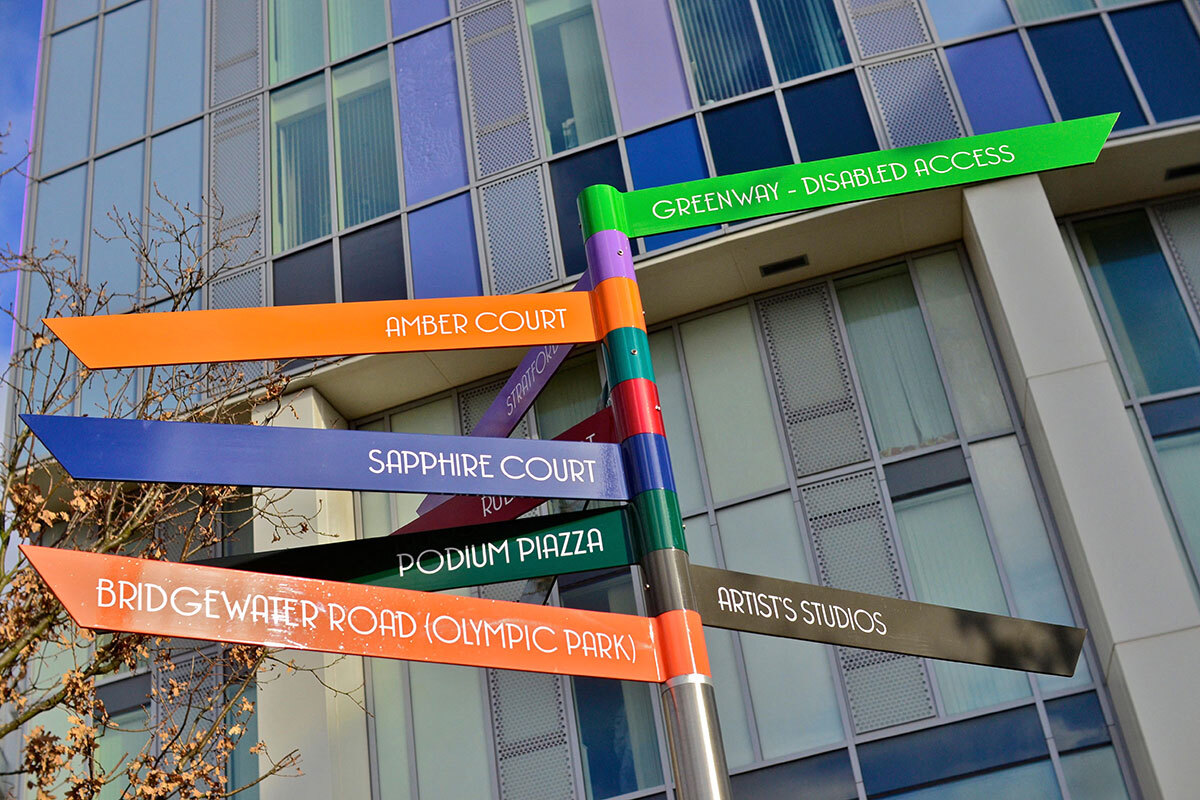 London landlord Notting Hill Genesis has said it had to evacuate hundreds of residents from their homes weeks before Christmas due to an “emerging” building safety issue with reinforced concrete slabs #UKhousing
Around 300 residents from three blocks in the Halo development in Stratford, east London, were told to leave their homes on 10 December for several months after cracks were discovered in key structural columns.
The housing association told Inside Housing the issues identified by the structural engineers related to the blocks’ concrete “transfer” slabs, a floor arrangement where a column sits on top of a slab but does not have a supporting column directly beneath it.
It comes after the Building Safety Regulator (BSR) issued a warning last Friday about the risk of potential structural weaknesses in buildings constructed in this way.
“The structural integrity of reinforced concrete transfer slabs is an emerging building safety issue, and we regret that we have had to ask residents to leave their homes due to the issue having been identified at Stratford Halo,” a Notting Hill Genesis spokesperson said.
The affected buildings sit at the edge of the Olympic Park and were completed as part of the London 2012 development, with the 43-storey Halo Tower as its centrepiece.
In June an intrusive inspection found cracks at some of the lower blocks, leading to 26 households in Sapphire Court being relocated to temporary accommodation. A further group was moved out in November.
At the time, Notting Hill Genesis said residents in Amber Court, Opal Court and Ruby Court could stay provided that “temporary propping” was installed.
However, that work was never completed, and in December the landlord could not determine that the blocks were safe to occupy. This led to the “difficult decision” to move all tenants and leaseholders from the blocks into temporary accommodation.
Halo Tower and a fifth block, Warton Court, were also assessed but Notting Hill Genesis said it had “no concerns” over these buildings due to the differences in construction methods and design.
The landlord said it was still in the process of moving every household into a suitable home, and it expects they might not be able to move back for “several months”.
A spokesperson said: “We are deeply sympathetic to the impact this decision has had on people living in Amber, Opal and Ruby Courts. This is a significant undertaking and is a decision we have not taken lightly: however, we hope our residents will understand why we have taken this very difficult decision to ensure their safety.
“We know what a difficult and unsettling time this has been for everyone, and in particular at this time of year. We’ve put in place a dedicated officer for every household, a daily on-site support hub to help those needing to move, and a 24-hour phone and email hotline.”
Tenants will still pay rent on their home, which goes towards the cost of their temporary alternative accommodation, while those who have chosen to stay with friends and family will have their rent refunded.
The landlord said it is ensuring no tenant would be left “out of pocket” by having to move, by paying for their food if they are staying in hotels, and reimbursing any reasonable expenses such as additional travel costs.
In an advice note to building owners published last week, the BSR said it had identified a potential structural safety issue affecting reinforced concrete buildings constructed with ‘transfer slabs’.
The regulator said it was investigating the risks associated with the “inappropriate design” of transfer slabs.
One of the issues it has identified is the failure mechanism of “punching shear”, where a high concentration of load causes a column to punch through a reinforced concrete transfer slab.
The BSR’s note said this could result in a collapse in part of a building, but added that it was not aware of any building collapse caused by this in the UK.
It said the design feature has been used in the UK for over 25 years and is particularly common in mixed-use developments where the column grid changes between floors, but not all buildings of this nature will have issues.
“We are working with industry experts and the Ministry of Housing, Communities and Local Government (MHCLG) to better understand the extent of the risk, and how the risk can be identified and managed proportionately in existing [properties],” it said.
“We will be providing further advice in due course, and we ask that building owners stay informed on this issue.”
The Halo development has run into building safety issues before. In 2019, parts of the 700-home development had to be reclad after post-Grenfell checks found they were wrapped in flammable high-pressure laminate (HPL) panels.
Sign up to Inside Housing’s Building and Fire Safety newsletter
Sign up to Inside Housing’s fortnightly Building and Fire Safety newsletter, now including a monthly update on building safety from Inside Housing’s contributing editor Peter Apps.
Click here to register and receive the Building and Fire Safety newsletter straight to your inbox.
And subscribe to Inside Housing by clicking here.
Already have an account? Click here to manage your newsletters.
Latest stories